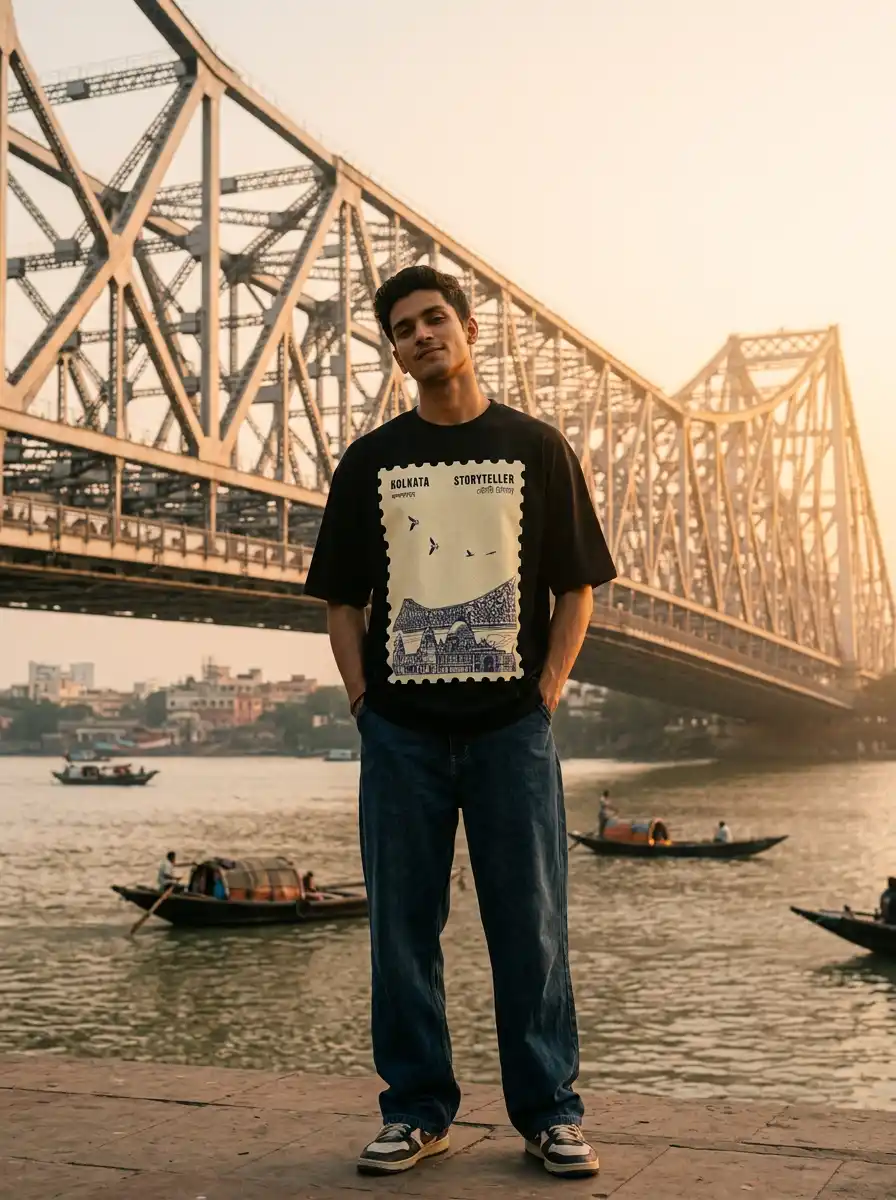
The Bengali graphic tee makes more sense once you understand adda. Adda is unhurried, purposeless, deeply serious conversation — hours of it, on rooftops, at cha stalls, on the steps of a shop that closed twenty minutes ago.
A city that talks this much was always going to end up wearing its conversation.
What Adda Actually Is
Outsiders translate adda as “chat” or “hanging out”, which misses it entirely. Adda has no agenda and no productive outcome, and that is the point. It is conversation as an end in itself.
It also has rules. Nobody dominates. Digression is welcome. Being funny counts for more than being right, and being interesting counts for more than both. Those values map almost exactly onto what makes a good graphic tee.
Why Conversation Produces Better Graphics
A logo tee closes a conversation — it tells you what the wearer bought. An adda-shaped tee opens one. It offers a line, a joke or a reference and waits to see who picks it up.
That is why so many Bengali graphic tees are text rather than image, and why the text is usually a fragment rather than a statement. A fragment invites a response. A statement does not.
The Cha Stall as Design Brief
Picture the setting the shirt is actually worn in: a roadside stall, small clay or paper cups, five people standing, no chairs, ninety minutes minimum. Everyone can see everyone’s chest at close range.
That environment sets real constraints. The graphic has to read at two metres, survive being leaned against a wall, and not embarrass the wearer when someone’s mother walks past. Loud but not crude, clever but not smug.
Humour That Includes Rather Than Excludes
The best Bengali slogans are generous. They laugh at a shared situation rather than at a target — the tyranny of relatives asking about marriage, the certainty that any plan will start an hour late, the national sport of complaining about the food while finishing it.
Wear a shirt that mocks other people and adda turns against you. Wear one that mocks a situation everyone recognises and you have contributed something. That distinction is the whole craft, and it is covered further in our piece on Bengali slang tees.
From Wall to Chest
Kolkata already had a habit of putting text in public long before printed tees were affordable — political wall writing, hand-painted hoardings, little magazines sold off the pavement on College Street.
The graphic tee simply moved that habit onto a body. Same instinct, portable. The city did not adopt streetwear so much as find a new surface for something it was already doing.
Dressing for a Four-Hour Sitting
Adda is physically undemanding and sartorially punishing. You will stand for a long time, sit on something dusty, and sweat quietly throughout.
Cotton, relaxed fit, dark enough to survive a spilled cup. An oversized cut earns its place here — it moves air, it does not cling, and it displays a text graphic better than a slim fit does.
Why It Has Not Gone Away
Plenty of people have declared adda dead — first television, then the internet, then phones. It keeps not dying. The venues shift and the hours shrink, but the format survives because the appetite is genuinely cultural rather than circumstantial.
As long as the conversation continues, clothing that starts one will have a place in it.
Say Something Worth Discussing
Every print we make began as something someone actually said. Browse the collection and find yours. Tag #storyteller_india — we repost our favourites on Instagram.