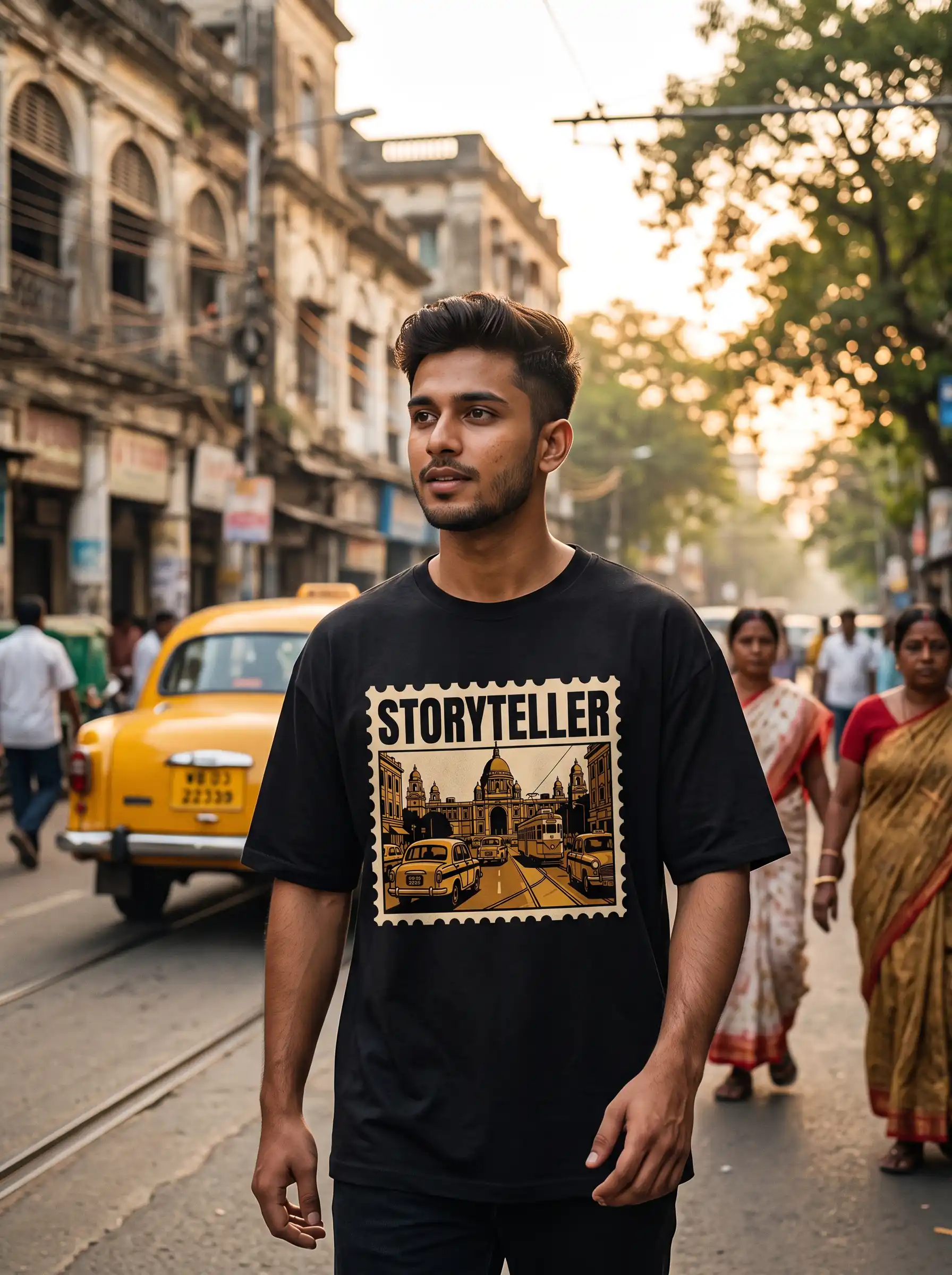
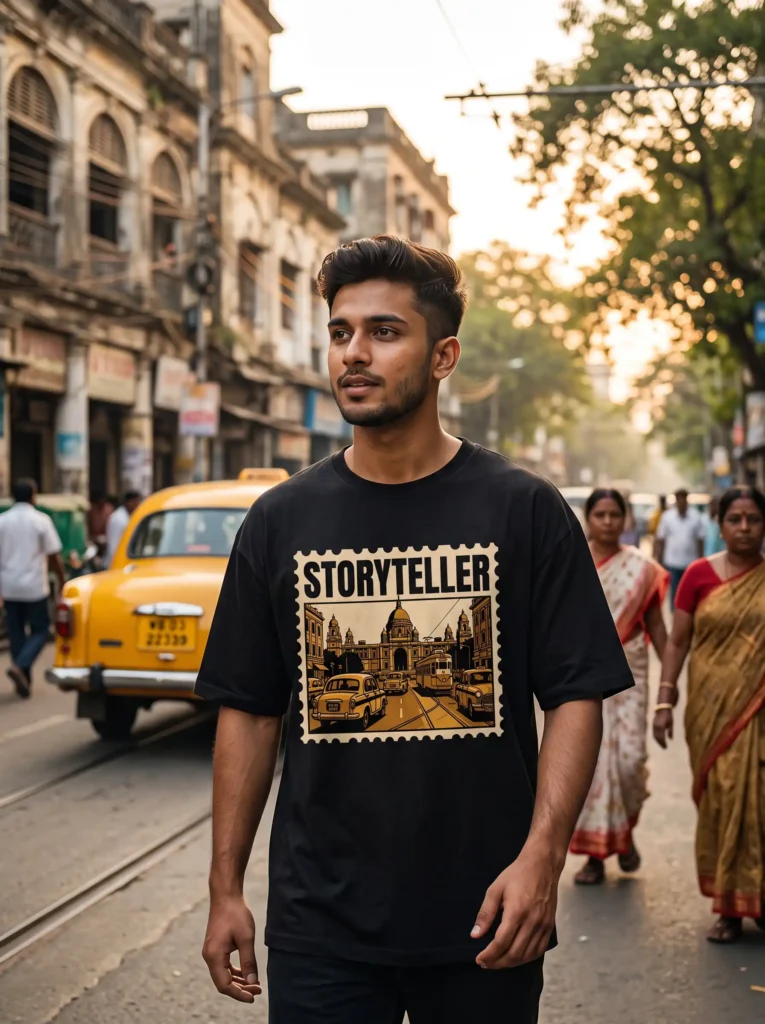
Bengali streetwear did not arrive by copying Mumbai or Delhi. It grew out of a city that has always argued in public, quoted films in ordinary conversation, and treated a wall as something to write on. Kolkata built its street style the same way it built everything else: slowly, stubbornly, and with a lot of talking.
This is how Bengali streetwear actually formed, and why it looks nothing like the rest of Indian fashion.
Bengali Streetwear Started With Words, Not Clothes
Most street style scenes begin with a silhouette. Bengali streetwear began with language. Kolkata has a long habit of putting text in public: wall graffiti before elections, hand-painted cinema hoardings, little magazine covers sold on College Street, the slogans of decades of protest marches.
By the time graphic tees became affordable to print locally, the city already had a vocabulary waiting. A phrase everyone recognised carried more weight than a logo nobody did. That is the root difference, and it still shows.
The Four Things That Shaped the Look
Adda. Hours of unhurried conversation. Clothes had to survive sitting on rooftops, footpaths and cha shop benches, so comfort beat structure every time.
Cinema. Ray, Ghatak, later Feluda and Byomkesh. Quotable, visually literate, and shared across generations.
Print culture. Little magazines, pamphlets, hand-set Bengali type. The city reads, and it respects a well-set letter.
Weather. Nine months of heat and humidity. Heavy layering was never an option, so the graphic had to do the work.
Why Kolkata Rejected Logo Culture
Elsewhere, streetwear status came from the label — the bigger and more foreign, the better. Kolkata largely refused that trade. In a city where showing off is quietly frowned upon but being interesting is rewarded, a shirt that announces how much it cost says the wrong thing.
A shirt carrying a line from a film, a piece of Bengali wordplay, or a reference only some people will catch says the right thing. It starts a conversation instead of ending one. That is a very Bengali way to dress.
The Typography Problem Nobody Solved For Us
Designing in Bengali is harder than designing in Latin. The script hangs from a top line rather than sitting on a baseline, the conjuncts stack, and most global type tools were never built with it in mind. For years that meant Bengali on clothing looked like an afterthought — a font stretched to fit.
That has changed. Designers now treat the letterforms as artwork, spacing and weighting them properly. The script is genuinely beautiful before it means anything, and finally it is being set that way.
What Bengali Streetwear Looks Like in Practice
Strip away the theory and the wardrobe is unfussy: a strong graphic tee, straight or relaxed trousers, footwear built for walking on broken pavement, and one layer you can tie around your waist when the humidity breaks.
The fit question matters more than the label. Oversized reads younger and more street; regular fit carries better into work and family settings. Most people here own both and switch depending on who they are meeting.
It Is a Scene, Not a Trend
Trends arrive from outside and leave on schedule. Bengali streetwear is closer to a continuing argument the city is having with itself about what is worth saying out loud. That is why it has survived several fashion cycles without needing a relaunch.
Kolkata’s cultural footprint is disproportionate to its size — the city produced India’s only Nobel laureate in Literature, and that literary self-image runs straight through how people dress. Words first.
Wearing It Without Costume
One warning. Bengali streetwear collapses the moment it becomes fancy dress. If every item is loudly referential, the effect is a theme, not a wardrobe.
Keep it to one strong piece at a time. Let a single tee carry the reference and keep everything around it quiet. That restraint is the style.
Wear Your Story
Every Storyteller print starts with something Kolkata actually said, watched or lived through. Browse the collection, and tag us with #storyteller_india when you wear it — we repost our favourites on Instagram. Free shipping on prepaid orders over ₹999.